September 15, 2025
by James Leonard M. Bautista, AMT
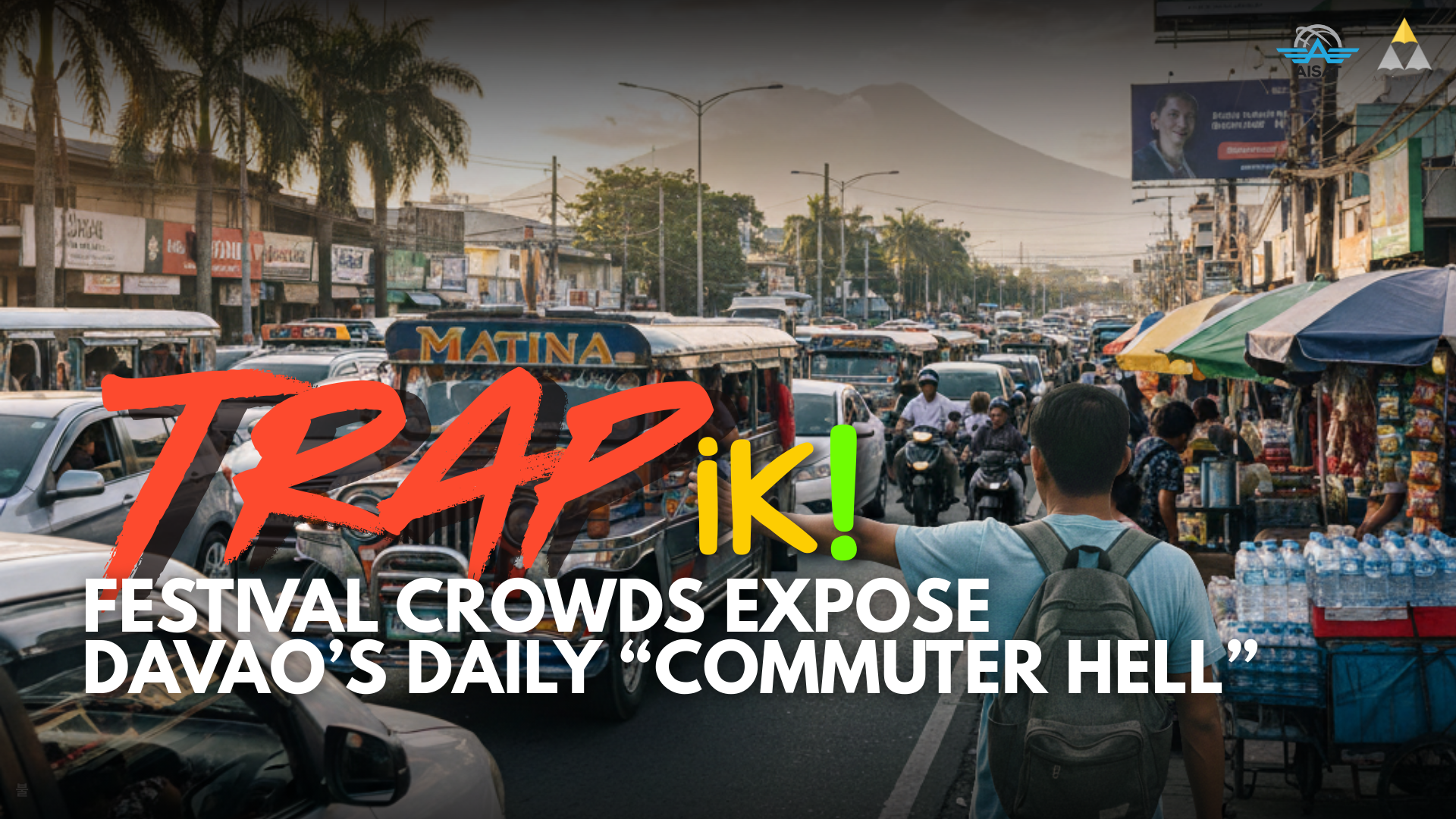
Davao City, Philippines — The recent Kadayawan Festival showed off Davao City’s rich culture, but it also demonstrated how bad the city’s problems are getting: its public transportation system is falling apart, making life miserable for hundreds of thousands of people who have to commute every day. The giant crowds at the festival were too much for the already strained network, which made people even more angry about how slow the system is and how long it takes to get modern solutions.
The city used to be known for its order, but now it’s often on lists of cities with bad traffic. The TomTom Traffic Index for 2024 said that Davao City was the 8th most congested city in the world. The ranking means that driving just 10 kilometers on the city’s main roads can take an average of 28 minutes and 17 seconds, which means that people who use public transportation lose more than 100 hours a year stuck in traffic.
Davao’s public transportation system depends a lot on an old fleet of jeepneys and multicabs. People who use public transportation are frustrated not only because of the traffic, but also because they don’t see a clear, long-term solution. The government’s main response is the Davao Public Transport Modernization Project (DPTMP), formerly known as the High Priority Bus System (HPBS). It is a big plan to replace the old fleet with 1,105 new, eco-friendly buses on a 672-kilometer network.
The DPTMP, on the other hand, has been delayed for years. The Department of Transportation (DOTr) and the local government got money for the project, including a loan from the Asian Development Bank (ADB). However, the project’s complexity, which includes signing contracts, doing civil works, and dealing with right-of-way issues, has repeatedly delayed the start of operations.
Years ago, the project’s conceptualization led to the hope that it would be partially operational by 2026. Meanwhile, reports indicate that the DPTMP has prevented the renewal of thousands of jeepney franchises. This means that there are fewer rides available for the public, but there is no modern replacement, which makes the current congestion worse.
The commute is more than just a hassle for workers and students; it hurts their health. Reports from local youth groups and universities show that long travel times caused by traffic jams make people much more stressed and hurt their academic and job performance. People who commute know exactly what they need: A system that is efficient and easy to use has schedules that are easy to follow, transfers that go smoothly, and automated fare collection. Sustainability: Moving away from old engines and toward new, comfortable, and environmentally friendly cars. Systemic Justice: A plan that isn’t just a quick fix but a revolutionary network that moves people better than cars.
The festival was a success as a celebration, but the city is now dealing with an undeniable fact. Davao’s goal of becoming a major metropolitan center depends not only on its economy but also on its ability to provide all of its citizens with a basic right: safe and dignified public transportation. The government needs to stop making plans and breaking promises and start taking the decisive action that the people require right now.