October 15, 2025
by Jon Lorence Panelo
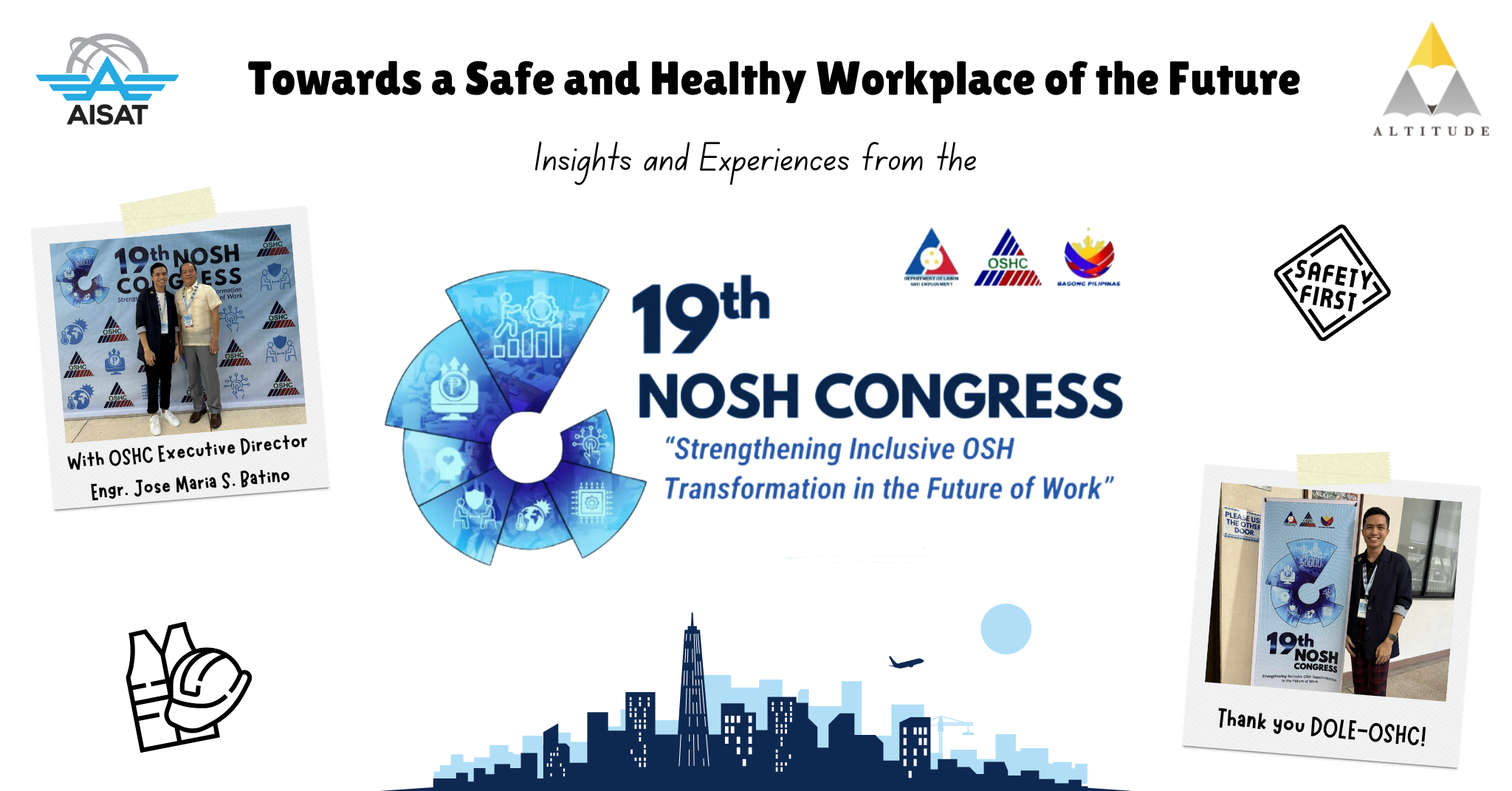
Culminating how Occupational Safety and Health (OSH) systems should respond to change, and how OSH practitioners and advocates are expected to embrace and adapt to transformation to help protect, empower, and guarantee decent work, the 19th Occupational Safety and Health Congress was held last October 6-7, 2025, at the Occupational Safety and Health Center, Diliman, Quezon City. With the theme “Strengthening Inclusive Occupational Safety and Health Transformation in the Future of Work”, the 19th NOSH Congress had more than 500 participants nationwide. The event had seven plenary sessions on capacity building, gig economy, mental health, safe spaces, climate change, modern technology, and digitalization. For day one, the 19th NOSH Congress opened with registration, an opening of exhibits, and an opening ceremony.
Moving towards the sessions, the plenary one focused on advancing governance and policy on OSH for a sustainable future. The first plenary discussed collaboration for OSH accident-free Philippines, efforts toward ratifying the OSH convention, strengthening OSH for the public sector, and protecting workers with biological hazards in the working environment. Plenary one emphasized the significance of OSH on a national level, the importance of policy, and the threat of a biological outbreak. Moreover, plenary two discussed navigating OSH challenges in a rapidly evolving world of work with topics on the revised Implementing Rules and Regulations (IRR) of Republic Act No. 11058, ensuring worker safety in a changing climate, and the healthy workplace initiative. The second plenary was significant as it highlighted proactive safety and the country’s response to climate change.
In addition, plenary three tackled the digital transformation of safety, health, and welfare programs for workers with topics like employee compensation benefits, innovation in benefit claims for government workers using digital technology, and bringing the social health insurance program closer to workers through digital transformation. During this time, participants also started roaming around the exhibit area while making inquiries, participating in fun games, and networking with fellow participants. The final plenary for day one was titled: “A Holistic Approach to Managing OSH Hazards and Risks”. Specifically, its topics were on the potential pitfalls of AI technology in managing OSH hazards and risks, the organizational factors that influence the implementation of OSH standards for the public sector, and the exposure assessment to heavy metals of electronic waste workers in selected treatment, storage, and disposal facilities and hazardous waste transporters. Such topics were also relevant in response to the changing world of work brought about by AI and modern organizations.
On the second day of the event, plenary five looked into expanding the preventive policies in protecting workers with topics on promoting worker safety and health in the railroad sector, setting the Philippine indoor air quality standards, and formalizing SMEs through OSH compliance. The aforementioned topics were also significant, as OSH must be present even at the smallest level in micro, small, and medium enterprises. Additionally, plenary six focused on empowering the workforce and OSH capacity-building practices. Particularly, its topics were on the barangay OSH patrol program in Cebu, cultivating the culture of safety and health in the mining industry in Palawan, and extending the chemical safety program to contract farmers in Asia. The topics of plenary six were highly relevant considering that OSH should exist as small as the barangay and the importance of having an ideal safety policy.
Furthermore, plenary seven was entitled: “Effective OSH Practices to Address the Challenges of the Evolving World of Work” with a presentation and a panel of reactors on implementing the NOSH strategy 2024-2028. The session on the NOSH strategy was important as it shows the need for an integrated safety mindset, a decent work agenda, a comprehensive action plan, resource mobilization, and a call to action. The 19th NOSH congress ended with closing ceremonies and a photo opportunity with all the participants. To the AISAT community, a safe and healthy workplace starts within you, and together, let us all let our dreams take flight!