
December 15, 2025
by Matte Jayferson M. Manon-og
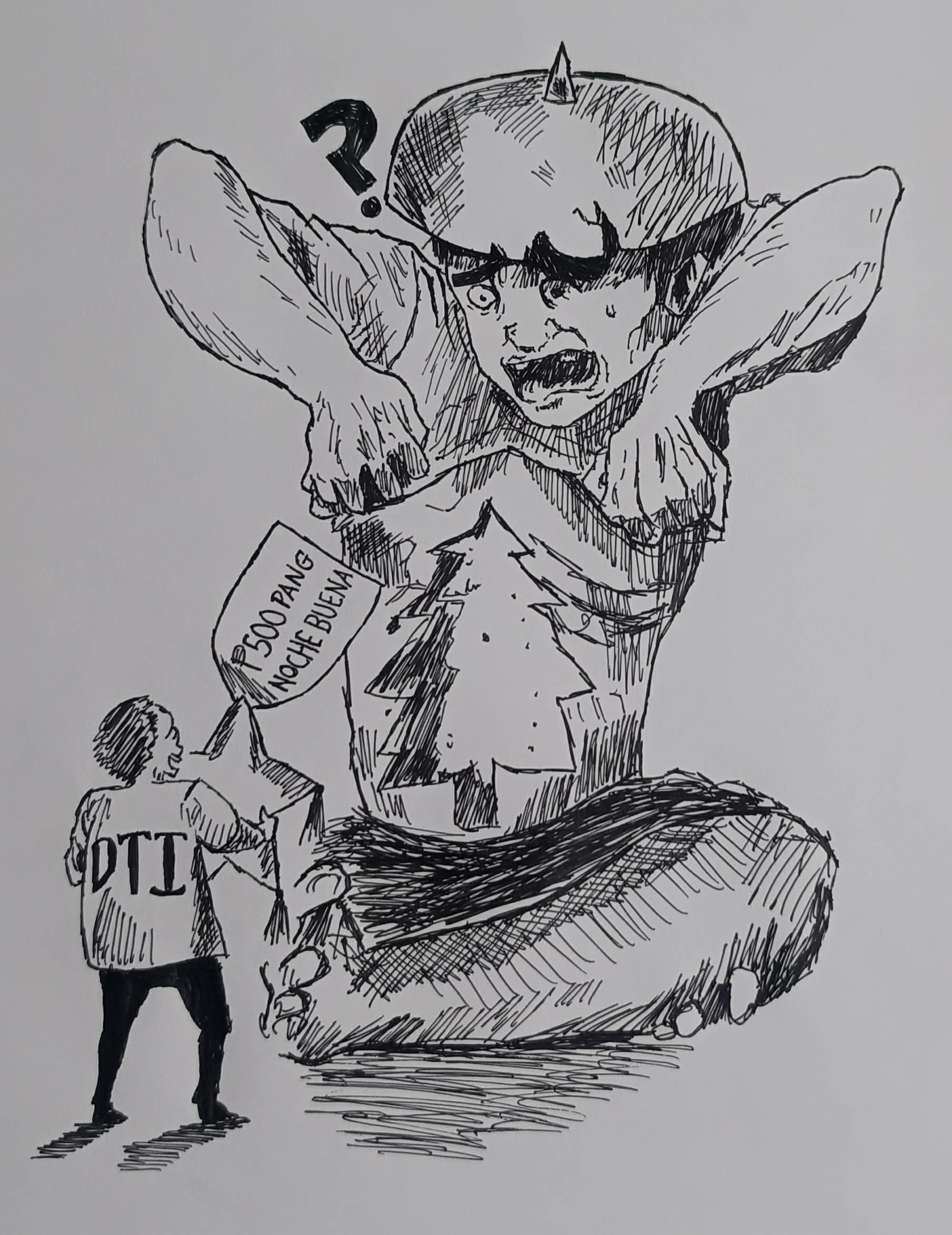
Every December, the Filipino dinner table becomes more than a place to eat; it becomes a symbol of family, togetherness, and oneness. Noche Buena, traditionally marked by spaghetti, ham, and salad, has long represented warmth and comfort after a year of hardship. This year, however, the celebration has once again been pulled into a national debate after the Department of Trade and Industry (DTI) declared that a ₱500 budget is already enough for a basic Noche Buena meal for a small family. While officials present this claim with confidence, many Filipinos are left wondering whether the statement reflects lived reality or merely an attempt to soften the harsh edges of inflation.
DTI Secretary Cristina Roque stood by the department’s assessment, insisting that families can still prepare a complete Noche Buena meal within the proposed budget.
“Actually, in fact, for ₱500, you can buy ham…you can already make macaroni salad and spaghetti,” Roque said in a radio interview over DZMM.
According to the DTI, its price guide shows that essential Noche Buena items such as ham, spaghetti sauce, elbow macaroni, and pasta have either remained stable or even decreased slightly in prices. Roque further emphasized that these items fall under basic necessities and prime commodities, which, she said, did not experience a price hike this season.
The DTI also attributed this supposed affordability to cooperation from manufacturers and retailers. Roque explained that the absence of price increases aligns with President Ferdinand Marcos Jr.’s directive to ensure affordable goods during the holiday season.
“Our manufacturers are cooperating to give the consumers and also to support the direction of the president,” she stated.
From the government’s perspective, the ₱500 budget is proof that interventions are working and that families can still celebrate without excessive financial strain. On paper, the numbers appear neat, reassuring, and politically convenient.
However, the economic watchdog Ibon Foundation strongly rejected the DTI’s claim, calling it misleading and disconnected from everyday experience. Ibon executive director Sonny Africa described the ₱500 estimate as “obviously false” and went further by labelling it “a part of government propaganda.” In a phone interview, Africa argued that even officials themselves likely understand how unrealistic the figure is.
“I think they are saying that on air even though they know it’s not true, to really cover up the worsening situation,” he said, pointing out the growing gap between official statements and household realities.
Africa stressed that while individual items may show marginal rollbacks, the total cost of preparing a meaningful Noche Buena remains beyond ₱500 for most families. He emphasized that inflation cannot be measured item by item without considering purchasing power and wages.
“Well, for us, it’s obviously not true,” he remarked, adding that the issue is not creativity or lack of budgeting skills, but the steadily rising cost of living. For many households, ₱500 barely stretches past basic groceries, let alone a meal imbued with cultural and emotional significance.
Beyond the numbers, the debate exposes a recurring pattern in government reassurance. Each year, Filipinos are told that traditions are still affordable, if only expectations are lowered. The same number surfaced in 2019, when DTI suggested that a ₱500 budget could already produce a respectable Noche Buena for a family of four, while, in 2022, DTI doubled it down and introduced a ₱488 “budget assortment” and insisted that it was a realistic option. Instead of acknowledging that wages lag behind rising prices, the solution that is offered is often adjustment rather than reform.
Africa lamented this approach, saying, “The saddest thing is the DTI, instead of using its power, authority, and position to know the problem and listen to the people, it is using its mandate to become a propaganda department for the government.”
Such statements highlight growing frustrations over what critics see as perception management rather than genuine economic intervention.
Noche Buena, at its core, is not about extravagance but dignity. Families do not demand lavish feasts; they ask for honesty and understanding from those in power. Declaring that a ₱500 Noche Buena budget is enough may look comforting in press releases, but it risks redefining celebration and tradition into a mere survival. As Filipinos gather this December, the question remains unresolved: is Noche Buena still a night of celebration, or has it become a night of deprivation? Until the gap between budget claims and lived reality is addressed, that question will linger long after the plates are empty and decorations are cleared.