
December 30, 2025
by Zeth Angelo Bacaoco
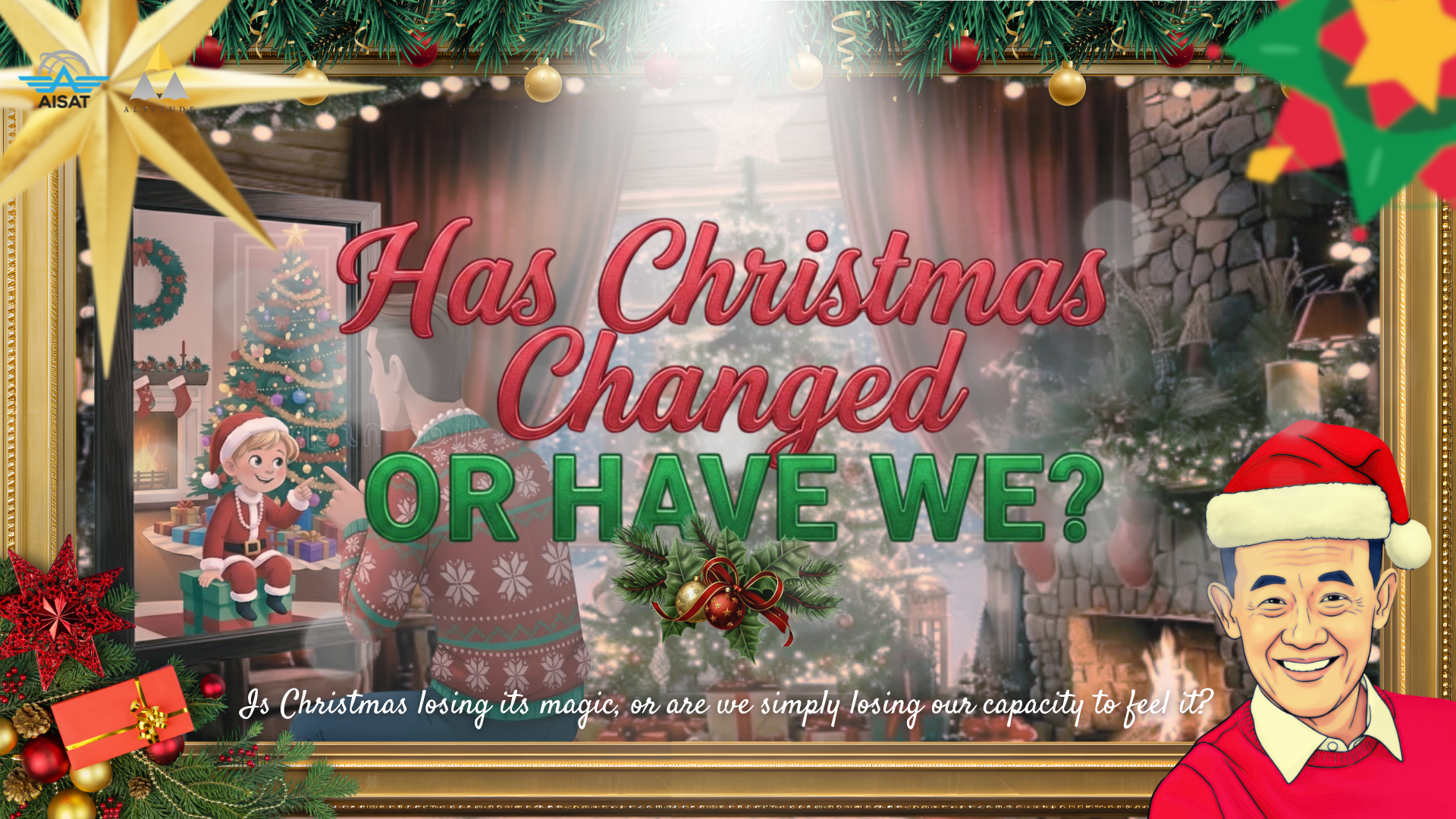
Every December, the question surfaces like clockwork: Is Christmas losing its magic, or are we simply losing our capacity to feel it?
I remember Christmas mornings when time seemed to stop. The world existed in shades of red and green, glitter and parols glowing in windows. The anticipation was so intense it was almost painful—that delicious agony of waiting, of believing something extraordinary was just hours away. The tree lights seemed brighter then. The carols sounded more beautiful. Even the cool December breeze felt different, charged with possibility.
Now, Christmas arrives with its usual fanfare, but something feels muted. The decorations go up, the music plays—”Jose Mari Chan season” they call it now, half-joking, half-resigned—and the gifts are wrapped. Yet that old enchantment hovers just out of reach, like trying to remember a dream that dissolves the moment you wake. We find ourselves asking: Did the holiday change, or did we?
The easy answer is to blame the world. Christmas has certainly become more commercialized, more frantic, more obligation than celebration. The magic starts in September now, the “ber months” stretching the season so thin it loses its shape. Social media has transformed the holiday into a performance, each family competing to project their perfect Noche Buena tableau. The pressure to create magical moments has somehow replaced the magic itself.
But perhaps the more uncomfortable truth is that we’ve changed. Growing up means accumulating knowledge that slowly dismantles wonder. We learn how the trick is done, how the presents appear, how the mythology works. We trade imagination for responsibility, and suddenly we’re the ones staying up late, managing budgets, coordinating schedules, planning the family gathering. The magic doesn’t disappear—it transforms into logistics.
And then there’s that phrase we hear repeated every year, usually said with a knowing smile: “Christmas is for children.” It’s presented as wisdom, as if we’ve all agreed that once you reach a certain age, you’re supposed to step back from the magic and become merely a facilitator of it. But when did we accept this? When did we decide that wonder has an expiration date?
Maybe this is the real theft of adulthood—not that Christmas changes, but that we’re told we’ve outgrown our right to fully feel it. We’re expected to perform joy while standing outside of it, to create magic, we’re no longer permitted to experience ourselves. We become stage managers of a show we can no longer be the audience for.
There’s a peculiar grief in this realization. We mourn not just our childhood, but our former capacity for pure, uncomplicated joy. As adults, we carry the weight of awareness: awareness of financial stress, of family tensions, of problems that don’t pause for the holidays. We know that January brings bills, that happiness is temporary, that nothing gold can stay. How can we lose ourselves in Christmas magic when we’re so painfully conscious of everything around it?
Yet maybe this awareness doesn’t have to be the end of the story. Perhaps the challenge of adulthood isn’t to recapture childhood wonder but to discover a different kind of magic—one that exists not despite our knowledge, but because of it. There’s something profound in choosing joy when you understand how fragile it is. There’s magic in creating moments you know your children will remember, in keeping traditions alive, in finding gratitude amid the chaos.
And maybe we need to push back against the idea that Christmas is only for children. Yes, children experience it with an intensity we can’t replicate. But why should adults resign themselves to being mere spectators? Why can’t the midnight mass still move us? Why can’t we still feel excitement opening gifts, still lose ourselves in the warmth of family gathered around a table laden with food, still get that flutter of anticipation when December rolls around?
The truth is probably that both things are true. Christmas has changed—it’s more commercial, more rushed, more complicated. And we’ve changed too—we’re more tired, more cynical, more aware. But awareness can be a gift if we let it. It teaches us to cherish the small moments: the first cool breeze of December, a favorite carol playing in a mall, the way candlelight softens a room during Simbang Gabi. It reminds us that magic was never really about perfection or innocence. It was always about connection, about pausing in the busiest time of year to create light together.
Maybe the real question isn’t whether Christmas has lost its magic, or whether it was only ever meant for children. Maybe it’s whether we’re brave enough to claim it again—not as children waiting for wonder to arrive, but as adults refusing to believe we’ve outgrown our capacity for joy. Perhaps Christmas hasn’t changed at all. Perhaps we just forgot that the magic was never about age. It was always about choosing to believe in something larger than ourselves, choosing to feel fully, choosing to let December matter.
And maybe that choice is ours to make, every single year.